- Home
-
Product
Advanced Po.. Powdered Ma.. Powdered Pr.. EPC Solutio..
- Solution
Powder addi.. High pressu.. Solutions o..- R & D
Testing & .. Rotating Di.. Industrial .. Plasma Atom.. Gas atomiza.. Co-develope..- News
- About skyli..
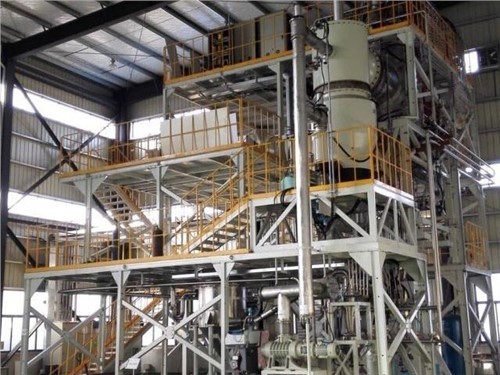
Single-Walled Carbon Nanotube (SWCNT) Production Equipment
Technical Principle: Single-walled carbon nanotubes (SWCNTs) are one-dimensional nanocarbon materials known for their exceptional electrical conductivity, thermal conductivity, and mechanical strength. They are key materials for next-generation power batteries, flexible electronics, and advanced composites, and repres..
Contact UsProduct introduction
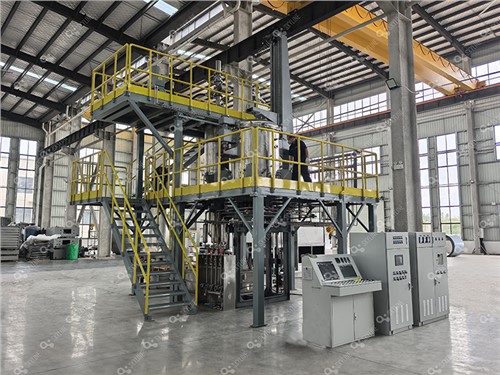
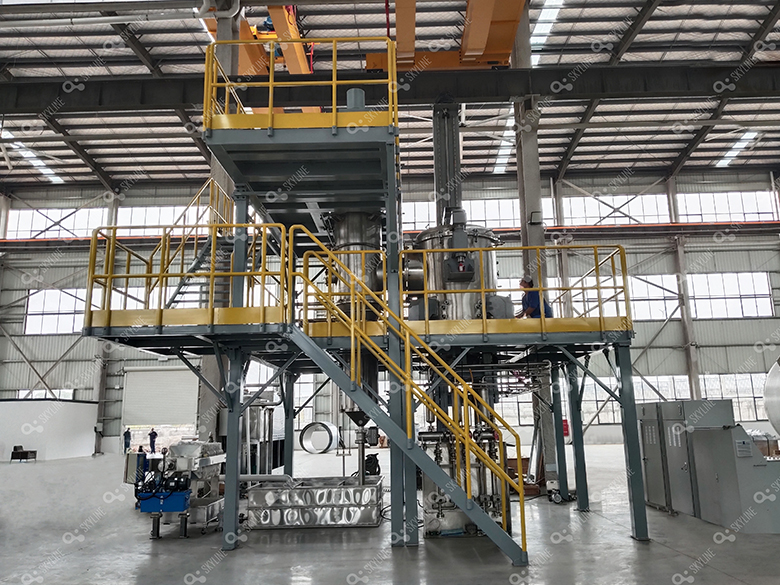
Our SWCNT production equipment supports two process routes: microwave plasma and DC plasma, providing options to meet different production and process requirements.
I. Microwave Plasma Method
Key Features and Advantages
1.High Production Efficiency:
Plasma technology promotes effective contact between the catalyst and carbon source, supporting high-quality SWCNT production with high efficiency and low operating costs.
2.Efficient Nanotube Collection:
A multi-layer, removable stainless steel mesh system captures carbon nanotubes and improves collection efficiency. Exhaust gases can be purified for collection or recycled, helping reduce environmental impact.
3.Integrated Safety Protection:
Safety monitoring and controller coordination help detect and prevent gas leaks. An interlocking protection system further enhances operational safety throughout production.
Main Equipment Components
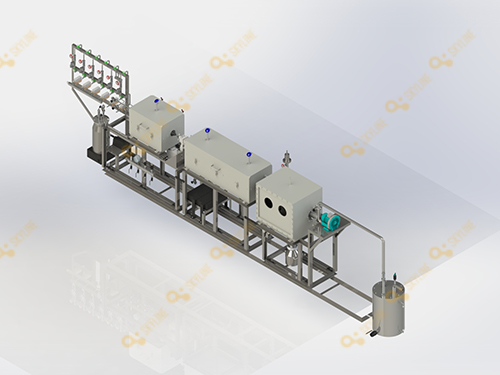
1. Liquid Feed Vaporization System
Liquid raw materials are delivered to the heating and vaporization unit by a peristaltic pump with precisely controlled flow rates.
- Operating Temperature: 200°C
- Configuration: Horizontal chamber, sealed welded stainless steel construction
- Heating Method: Electrical resistance heating
- Gas Inlet: An argon inlet is provided for use as a diluent or carrier gas for the vaporized reactants.
2. Catalyst Refinement System
A microwave plasma system operates at approximately 1200°C. Vaporized reactants, either directly or after dilution with argon, enter the microwave plasma generator, where the reactant molecules undergo decomposition and ionization to form plasma. The process produces nanoscale, highly active catalyst particles.
- Operating Temperature: Approx. 1200°C
- Plasma Torch Material: Quartz or other ceramic materials
3. Carbon Nanotube Growth System
Hot, nanoscale catalyst particles from the plasma generator enter the reaction chamber through a connecting interface. Methane is introduced into the chamber and thermally decomposed at high temperature to provide the carbon source. The catalyst promotes carbon nanotube growth.
- Operating Temperature: 1200°C
- Configuration: Horizontal reaction chamber
- Construction: Heat-resistant stainless steel with sealed welded construction
- Heating Method: Electrical resistance heating
4. Carbon Nanotube Collection System and Glovebox
Collects the produced carbon nanotubes and provides an enclosed handling environment.
5. Exhaust Gas Cooling System
Cools exhaust gases before subsequent treatment.
6. Exhaust Gas Treatment System
Processes exhaust gases before discharge.
7. Vacuum System
Provides the vacuum environment required by the process.
8. Gas Regulation and Control System
Regulates and controls gas supply during production.
9. Electrical Control System
Controls and coordinates equipment operation.
II. DC Plasma Arc Method
Equipment Overview
DC plasma arc technology is an established route for the cost-effective, large-scale, and stable industrial production of single-walled carbon nanotubes. With mature equipment technology and reliable performance, it offers a practical solution for manufacturing conductive additives and advanced carbon materials.
Technical Principle
Core process: High-temperature arc plasma → Carbon vapor → Catalytic growth of SWCNTs
1. Plasma Generation
A high-voltage, high-current DC supply is applied between a graphite anode and cathode in a vacuum or low-pressure inert gas atmosphere, typically helium (He) or argon (Ar). The gas breaks down to form an arc plasma.
2. Carbon Source and Catalyst Vaporization
The anode consists of high-purity graphite, transition-metal catalysts (Fe/Co/Ni), and a rare-earth metal (Y). The electric arc rapidly vaporizes the graphite into carbon vapor while simultaneously forming nanoscale metal catalyst clusters.
3. SWCNT Growth Mechanism
Driven by temperature gradients and gas convection, carbon vapor dissolves into and precipitates from the catalyst particles, enabling self-assembly and growth of single-walled carbon nanotubes.
4. Process Characteristics
The process features ultrahigh temperatures, rapid reactions, and high energy density. It combines physical vapor deposition (PVD) with catalytic growth to produce SWCNTs.
Main Equipment Modules
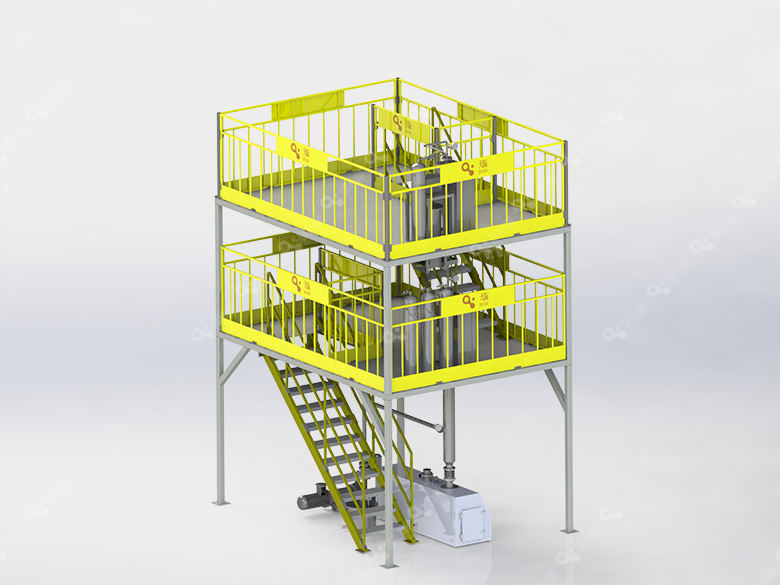
The complete system consists of five main modules:
1.DC Arc Power Supply System
2.Vacuum Reaction Chamber
3.Atmosphere Control System
4.Electrode and Catalyst System
5.Cooling, Collection, and Safety System
Key Features and Advantages
1.High Production Capacity, Low Cost: Suitable for large-scale industrial production.
2.Mature and Reliable Technology: Established equipment technology supports stable operation.
3.Adjustable SWCNT Content: The proportion of single-walled carbon nanotubes can be controlled.
4.Rapid Growth: Enables very fast carbon nanotube formation.
5.Broad Material Compatibility: Supports a wide range of material formulations and applications.
Main Applications
1. Conductive Additives for Lithium-Ion Batteries
Applications include lithium iron phosphate (LFP) batteries, ternary lithium batteries, silicon-carbon anodes, and solid-state batteries.
2. Conductive Plastics and Antistatic Polymers
Conductive modification of PC, ABS, PP, and PE for applications such as drone components and electrical and electronic housings.
3. Conductive Inks, Coatings, and Transparent Conductive Films
For flexible electronics, sensors, and electromagnetic shielding.
4. Thermally Conductive Composites
For thermal management films, thermally conductive gels, and thermal interface pads.
5. Supercapacitors and Advanced Battery Systems
For supercapacitors, lithium-sulfur batteries, and solid-state batteries, where SWCNTs serve as conductive networks and supporting structures.
6. Reinforced Composites
For resin-, metal-, and ceramic-based composites, improving mechanical strength, modulus, and wear resistance.
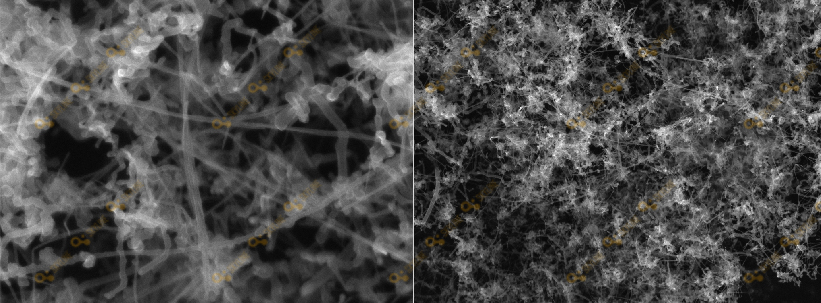
SWCNT electron microscopy images
Contact us for more information about technical specifications and customization options.
- Solution